The meaning of the bow
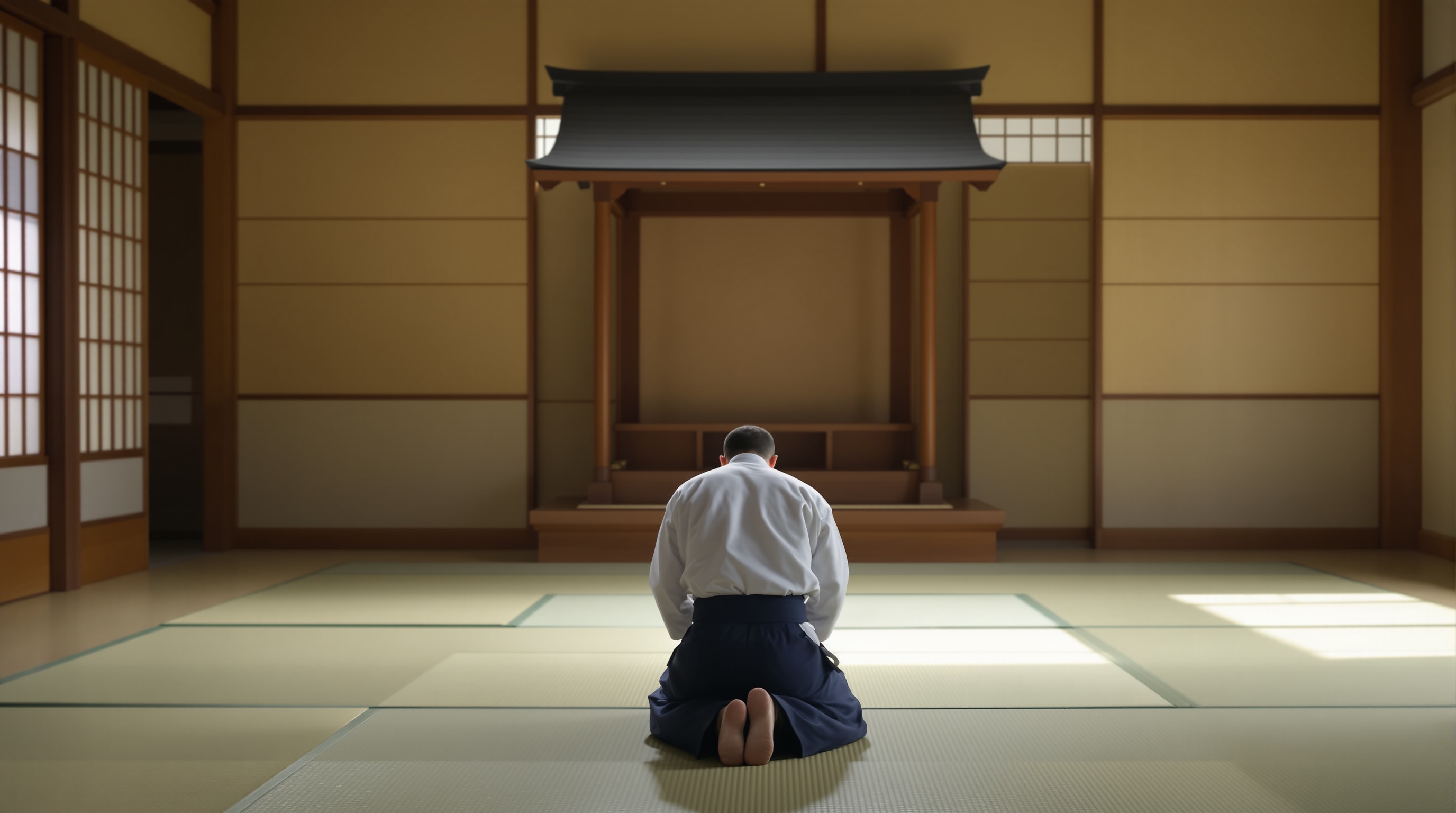
The bow, rei, is the most visible custom and the most misunderstood. It is not worship; it is a gesture of respect and attention, the physical equivalent of “thank you” and “I am ready.” Students bow when stepping onto and off the mat, at the start and end of class, and to each partner before and after practicing together. Rei appears in the seven virtues carried by the hakama’s pleats — courtesy is treated as a discipline in its own right.
Entering and leaving the mat
- Arrive in good time, with a clean uniform and clean feet; step onto the mat only when it is appropriate to do so.
- Bow when you step onto and off the training surface, and toward the front of the room (the kamiza) at the start and end of class.
- If you must leave the mat during class, catch the instructor’s eye first; do not simply wander off.
- Remove watches, rings, and jewelry before practice — they injure both wearer and partner.
Respect for your partner
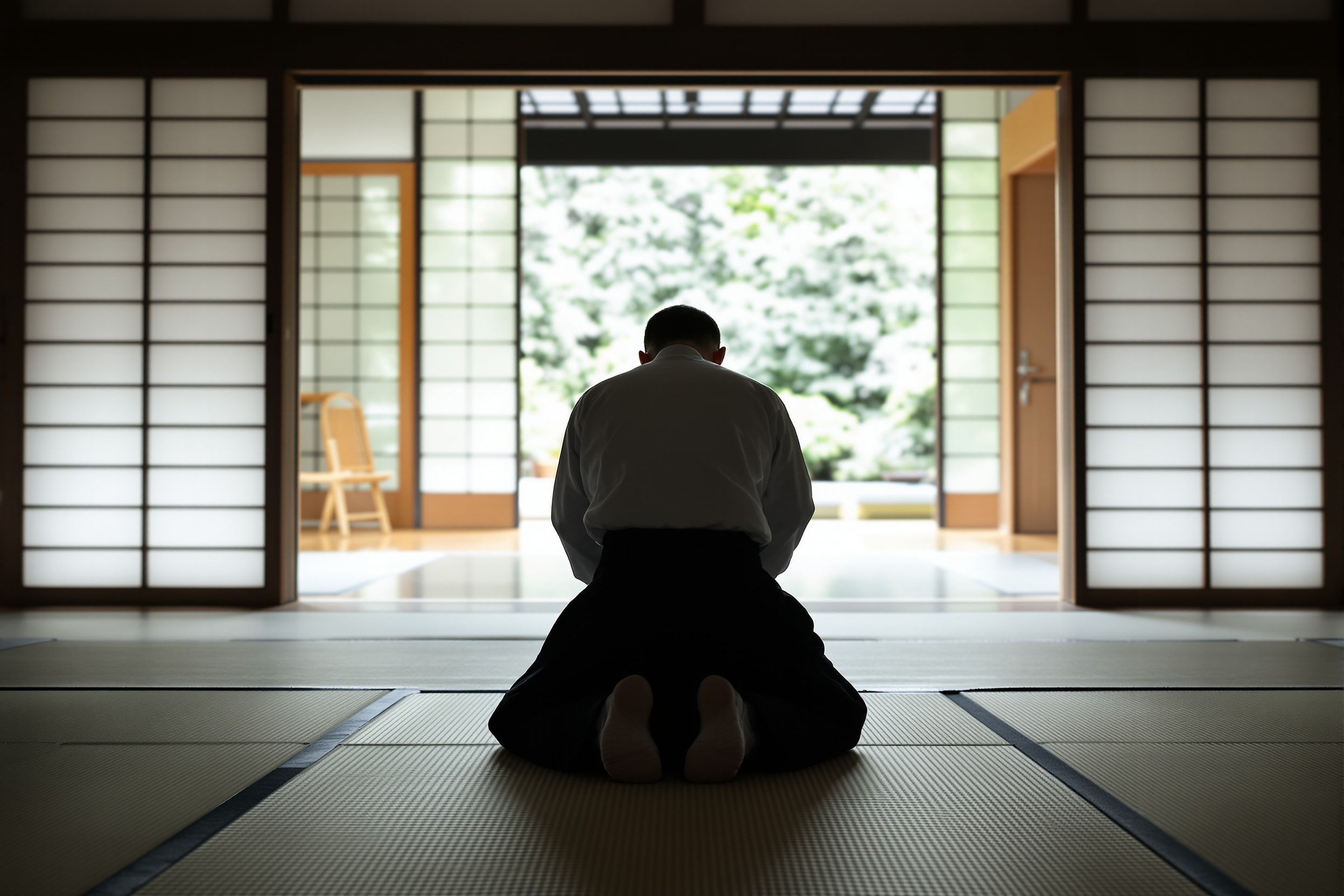
Aikido is practiced with a partner who is trusting you with their safety, and you with yours. That trust is the foundation of everything. Match your partner’s level rather than trying to “win” a cooperative exercise; apply techniques with control; and release the moment they signal — usually by tapping — that they have had enough. A senior student working with a beginner is expected to protect them, not to test them. This is why aikido has no need of competition to be effective.
What is said on the mat
A few set phrases carry most of the courtesy. Onegaishimasu — roughly “please, I ask this of you” — is offered to a partner before practicing together, and arigatō gozaimashita, thanking them in the past tense, when it ends. Hai acknowledges an instruction; sumimasen covers both apology and “excuse me.” Beyond these, most dojos keep talking to a minimum, on the grounds that aikido is learned through the body and a technique explained at length is a technique not being done.
Care of the space and uniform
The dojo (“place of the way”) is kept clean by the people who use it; sweeping the mat and tidying weapons are ordinary parts of practice, not chores done by someone else. The uniform is kept clean and correctly worn — hence the small skills of folding the hakama and tying the belt. None of this is fussiness for its own sake; a tidy space and a tidy uniform reflect and reinforce a tidy, attentive mind.
A note for visitors
If you visit a class, you need only watch quietly, follow the lead of the students, and ask afterward about anything you did not understand. Every school has its own particular customs, and the surest etiquette of all is to observe carefully and follow the room. Newcomers planning to try a class will find practical advice on the getting-started page.
Independent educational resource. Not affiliated with any dojo, organization, teacher, or individual.