Why weapons at all
Aikido grew out of sword and spear arts, and its empty-handed movements still carry their logic. Training with weapons makes that logic visible. A throw that seems mysterious with bare hands often becomes obvious once you have made the same cut with a wooden sword: the distance, the entering step, and the moment of contact are the same. Weapons work also sharpens posture and focus, because a swung stick is unforgiving of a wandering mind. The relationship between armed and unarmed technique is sometimes called riai, the “blending of principles.”
The bokken (aiki-ken)
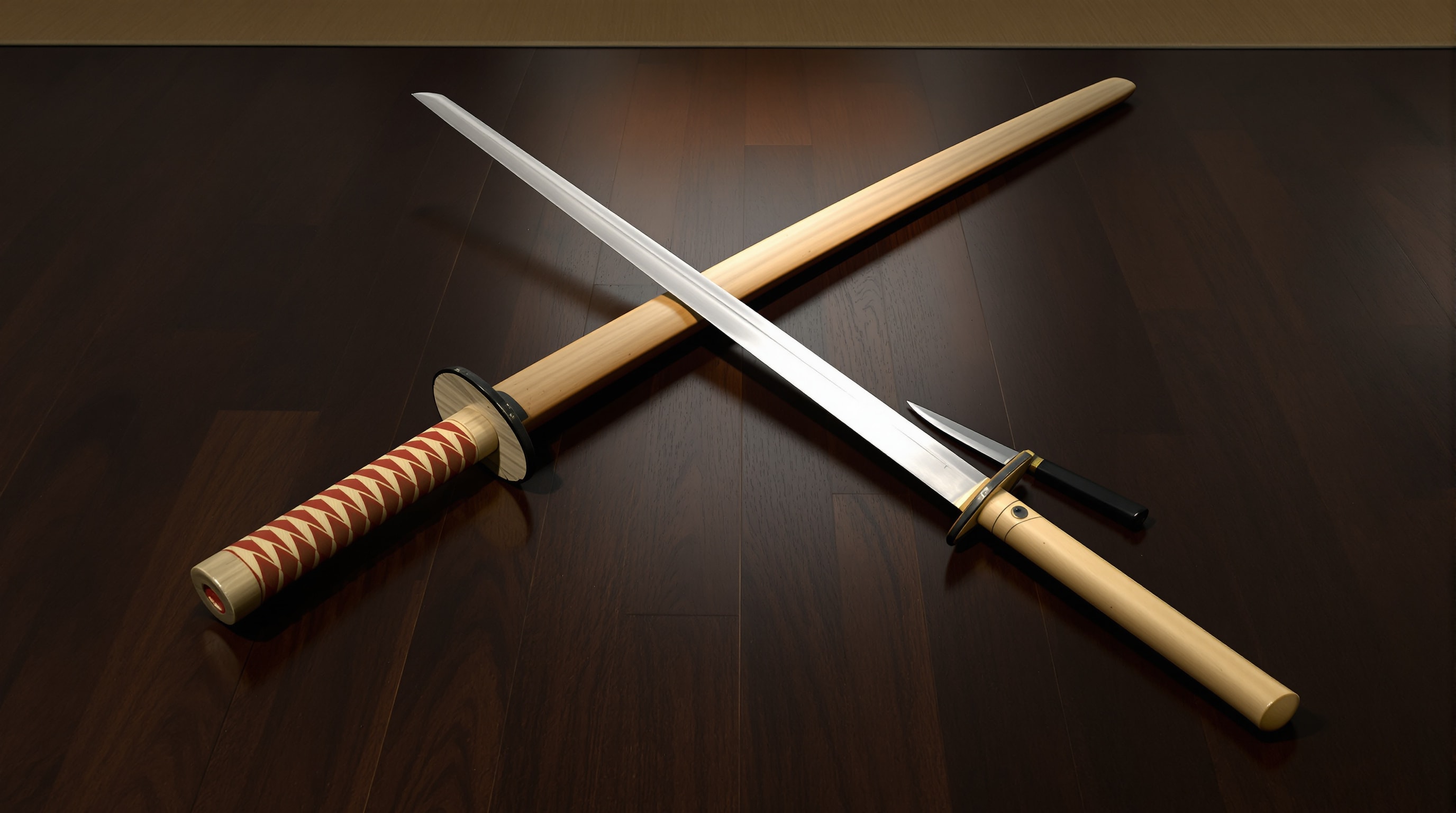
The bokken is a wooden sword, and practice with it is called aiki-ken. It teaches the straight, committed cut and the posture of the swordsman — both of which reappear in empty-handed throws such as shihō-nage, which is literally an arm folded like a sword cut. Partnered sword exercises teach timing and the reading of distance at a range where mistakes are clear and immediate.
The jo (aiki-jo)
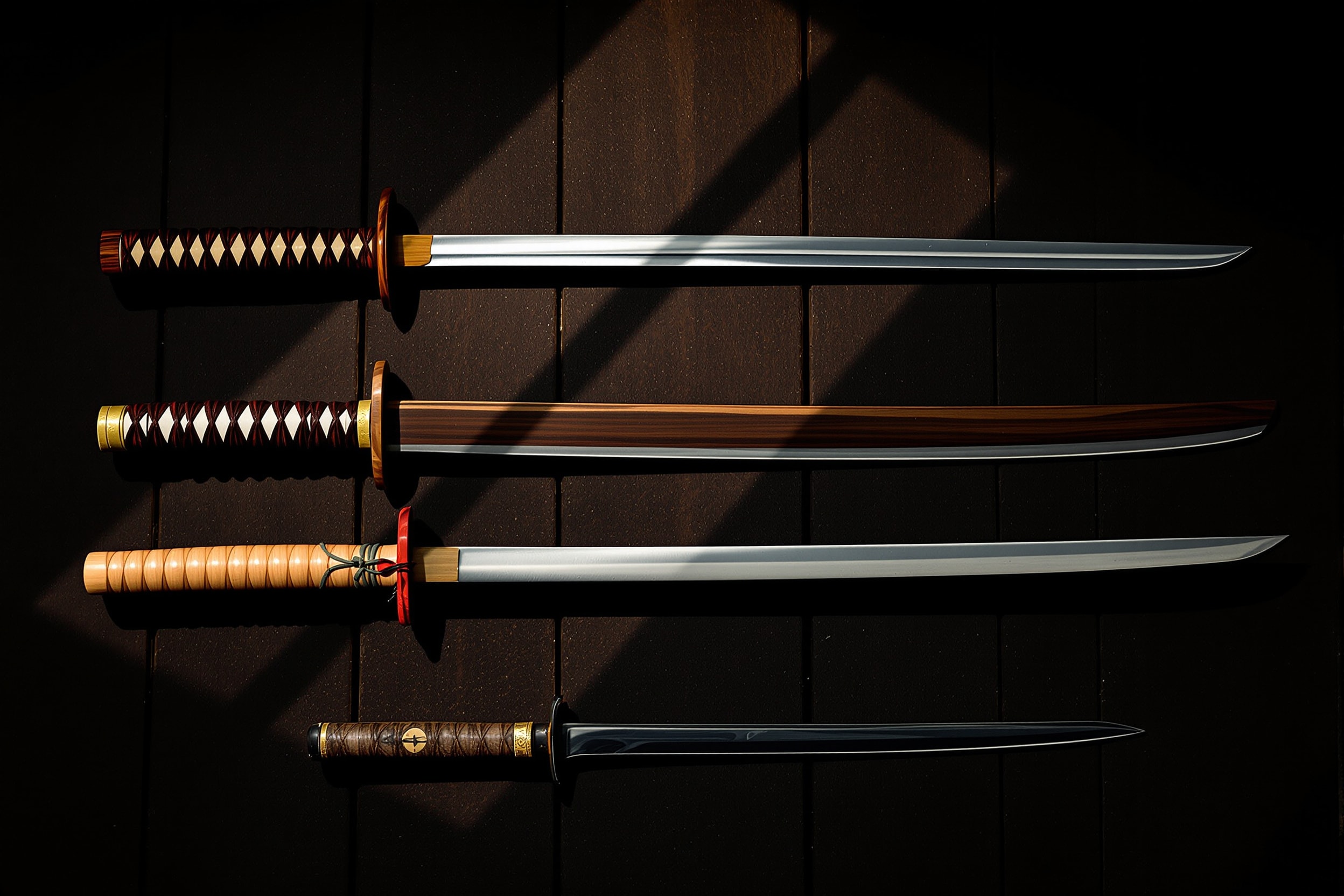
The jo is a wooden staff, shorter than a spear and worked with two hands. Practice with it, aiki-jo, adds thrusting and sweeping movements and a longer reach that changes how distance is managed. Because the jo can be gripped and moved in many ways, it is especially good for teaching how to extend energy along a line and how to move the whole body behind a technique rather than muscling it with the arms.
The tanto
The tanto is a wooden knife, used mainly on the receiving end: one partner holds it and delivers a committed thrust or strike (tsuki) so the other can practice safe disarms and controls. Knife defense is treated soberly — it is difficult and dangerous in reality — and the wooden tanto lets students study distance, timing, and control against a thrusting attack without risk. The fifth basic control, gokyo, exists specifically for this situation.
Solo forms and paired forms
Weapons work divides into what you practice alone and what you practice with a partner. Solo sequences — the counted suburi cuts and thrusts, and longer set forms such as the thirty-one-count jo kata — build the shape of a movement through repetition, and need no mat or partner. Paired forms, kumitachi with the sword and kumijo with the staff, supply what solo work cannot: a timing you must actually meet. The two feed each other, and most schools alternate them.
Safety and respect
Even wooden weapons demand care. They are treated with the same respect as live blades: carried and set down deliberately, never swung carelessly, and handed to a partner with courtesy. Beginners usually spend time on empty-handed basics before taking up weapons, and always follow an instructor’s guidance on distance and control. The customs that govern weapons on the mat are part of general dojo etiquette; the vocabulary appears on the terms page.
Educational overview only. Weapons must be handled under qualified instruction. Independent resource; no affiliation with any dojo or individual.