Two families: throws and controls
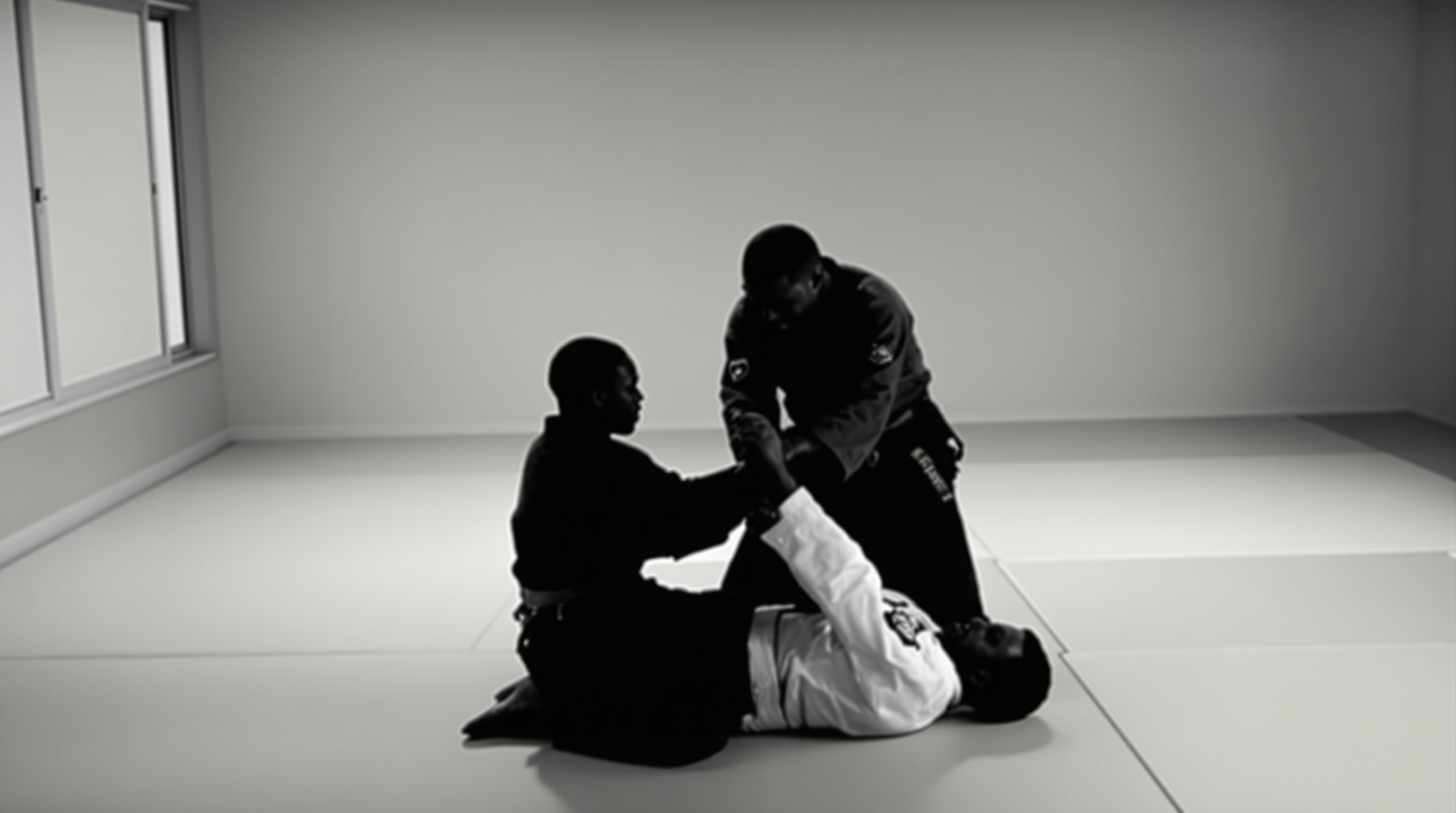
Most aikido techniques are either a throw (nage-waza), which sends the partner into a fall, or a control (katame-waza or osae-waza), which brings the partner down and pins them with a joint lock. Which one you use depends on the attack, your position, and the opening the attacker gives you. Both begin the same way: move off the line, connect, and lead the motion. Only at the end does the technique resolve into a throw or a pin.
The basic controls: ikkyo through gokyo
The foundational pinning techniques are numbered one through five and are usually learned in order. They share a family resemblance — each controls the attacker through the arm and shoulder and finishes with the partner face-down on the mat.
- Ikkyo (“first technique”) — an arm control that takes the partner down through the elbow and shoulder; the root from which the others grow.
- Nikyo (“second”) — a wrist adduction that produces a strong, controllable lock.
- Sankyo (“third”) — a rotational wrist lock that lifts the partner up onto their toes.
- Yonkyo (“fourth”) — a pressure control along the forearm.
- Gokyo (“fifth”) — a variant of the first technique adapted for a knife attack, with a different grip for safety.
Classic throws
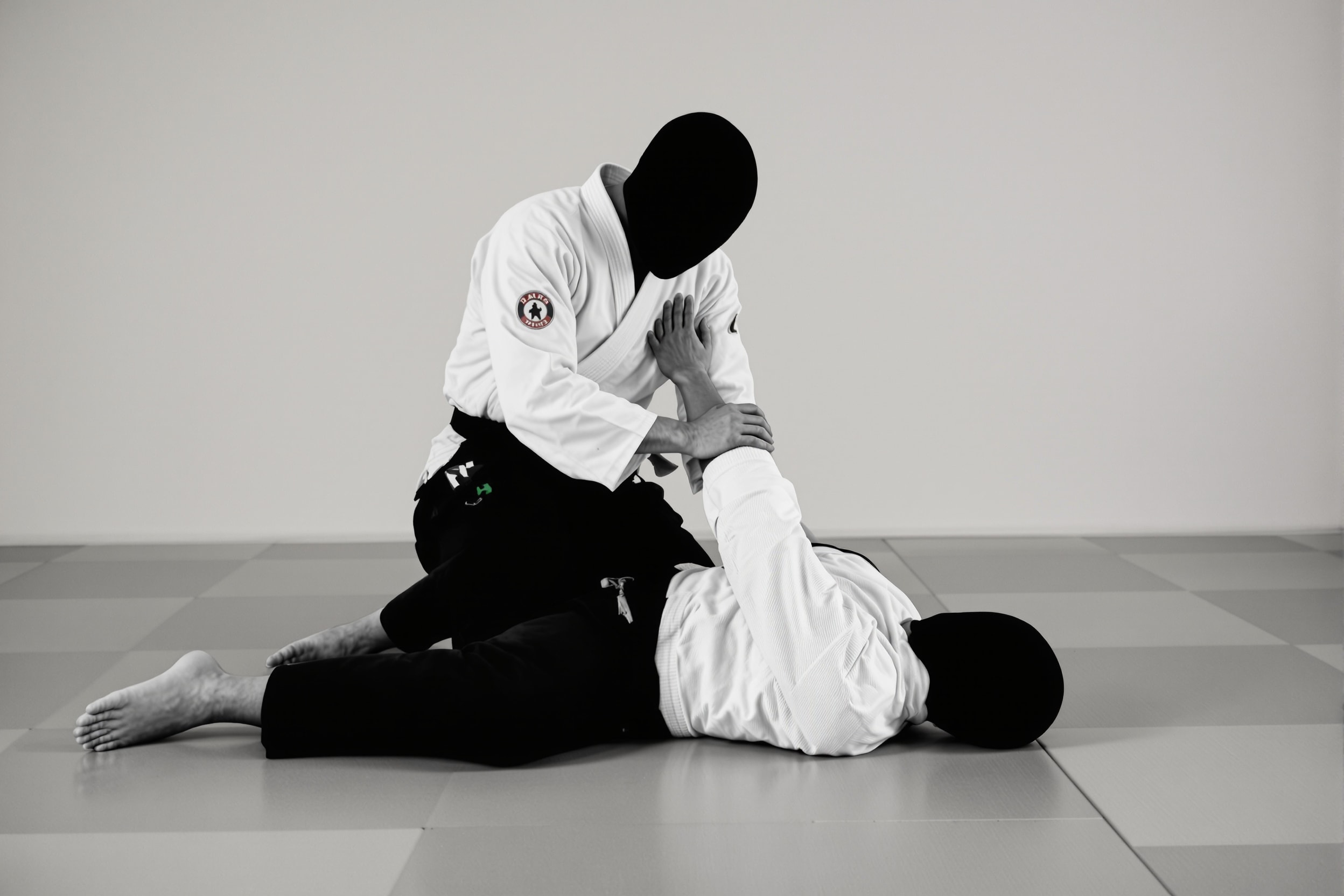
The throws are where aikido’s circular character is most visible. A few are learned early and reappear endlessly in more advanced forms:
- Irimi-nage (“entering throw”) — the defender enters deeply past the attack and the attacker falls as if meeting a turning door.
- Shihō-nage (“four-direction throw”) — the arm is folded like a sword cut, sending the partner down; it can be applied toward any direction.
- Kote-gaeshi (“wrist return”) — an outward wrist turn that throws the partner and can finish in a pin.
- Kaiten-nage (“rotary throw”) — the defender bows the partner forward and rotates them over.
- Tenchi-nage (“heaven-and-earth throw”) — one hand rises and one drops, splitting the partner’s balance.
Static and flowing practice
The same technique is drilled two ways. In kihon, the basic form, the attacker takes a firm hold and the defender works from a standstill; nothing moves until the structure is correct, which makes it slow, unglamorous, and the fastest way to find a flaw. In ki no nagare, the flowing form, the technique is applied while the attack is still travelling, so the throw resolves out of the momentum already there. Beginners live in the static form for a long while, because a technique that fails from a standstill will not survive speed — it will merely be disguised by the partner’s motion.
Attacks and the way they are named
Technique names in aikido usually pair an attack with a response. Shōmen-uchi is a straight overhead strike; yokomen-uchi, a diagonal one; katate-dori, a single-hand wrist grab; ryōte-dori, a two-hand grab; tsuki, a punch or thrust. So “shōmen-uchi ikkyo” simply means “the first control, done against an overhead strike.” Once you learn the two halves, the long Japanese names become readable. A fuller list lives on the Japanese terms page.
Ukemi: the art of falling
None of these techniques could be practiced safely without ukemi, the skill of receiving a throw and rolling or falling without injury. Beginners spend real time learning to roll forward and backward and to slap out of a hard fall, and this is not a lesser skill — the ability to be thrown well is what lets partners train at speed and lets a lifetime of practice happen without harm. New students should read the getting-started guide before their first class. For further reading, the Aikikai Foundation and the International Aikido Federation host technical and historical material.
Educational overview only — techniques must be learned in person from a qualified instructor. Independent resource; not affiliated with any dojo or individual.