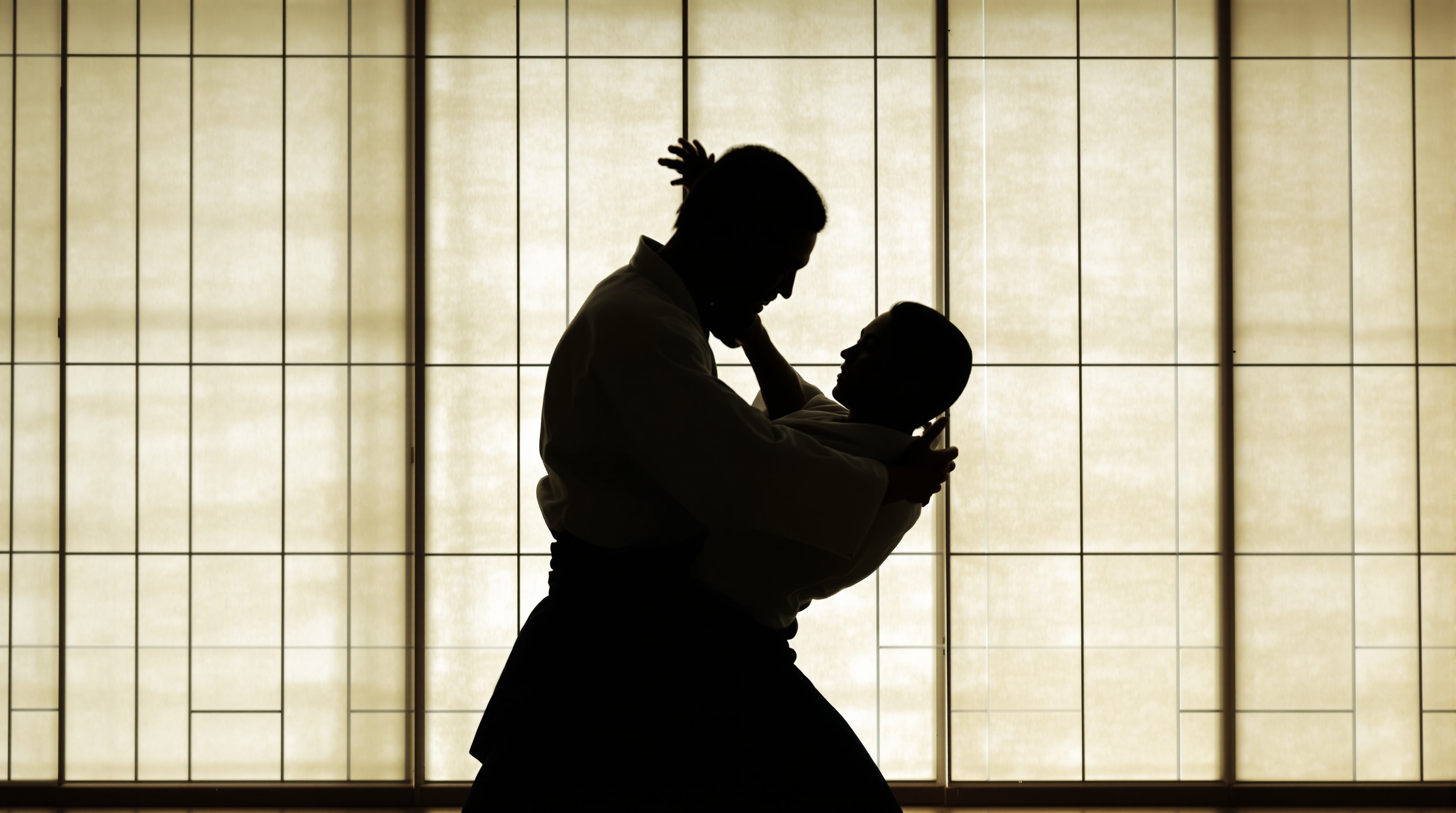
The meaning of the name
Aikido joins three ideas. Ai means to harmonize, join, or come together. Ki is the old East Asian concept of breath, spirit, or life energy — in a practical sense, the intention and momentum behind a movement. Dō means a way or path, the same character found in judō, kendō, and shodō (calligraphy). Read together, aikido is the way of uniting with energy: receiving what comes, joining with it, and guiding it to a peaceful conclusion.
That name is also a statement of intent. Where some martial arts aim to defeat, aikido aims to resolve. Its founder framed the art as a means of protecting oneself while, ideally, doing the least possible harm to the attacker — a demanding ethical standard that shapes how the techniques are taught.
How aikido works
An attack — a grab, a strike, a push — carries direction and force. Instead of blocking it, the aikidōka moves the body off the line of that force (a step called irimi, entering, or tenkan, turning), makes contact, and stays connected to the attacker’s motion. From that connection the practitioner leads the momentum into a throw or applies a joint control that pins the partner to the mat. Good technique feels less like a collision and more like a door opening at exactly the moment someone leans on it.
Because the method relies on timing, position, and structure rather than muscle, a smaller person can in principle handle a larger one. This is not magic; it is leverage, angle, and the patient study of how bodies move. Explore the individual movements on the techniques page, and the ideas behind them under principles.
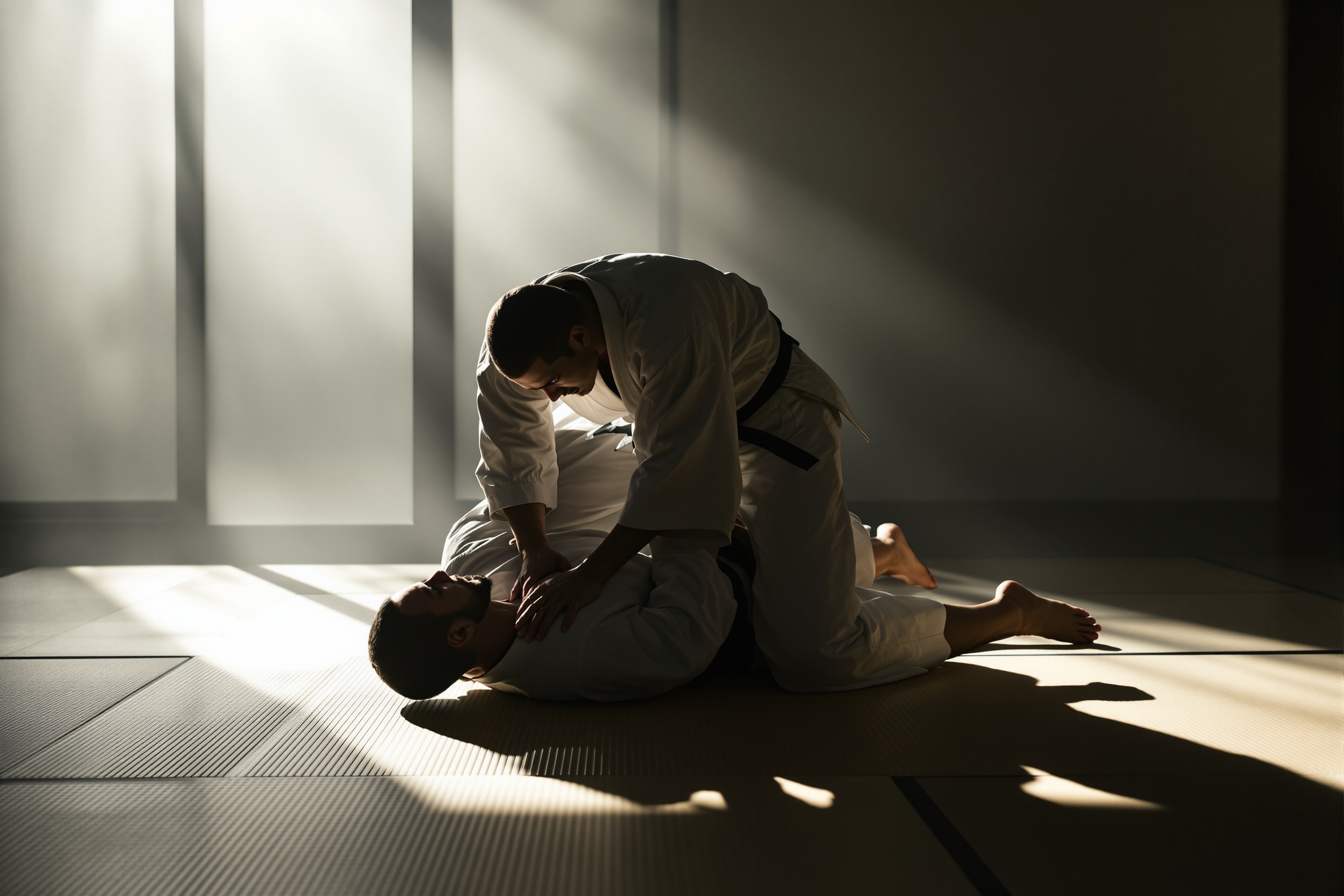
What a class looks like
A typical session begins and ends with a seated bow toward the front of the room, a mark of respect and focus rather than religion. Students warm up, practice rolls and breakfalls (ukemi) so they can receive throws safely, and then work in pairs, alternating between nage (the one who applies the technique) and uke (the one who receives it). There is no sparring for points and no competition; partners cooperate so that both can learn. Etiquette and safety customs are covered on the etiquette page.
How it differs from other martial arts
- No competition. Most aikido organizations hold no tournaments; the goal is skill and character, not winning.
- Defensive by design. Techniques respond to an attack rather than initiate one.
- Circular, not linear. Movement tends to spiral and redirect instead of pushing straight back.
- Weapons inform the empty hand. The wooden sword and staff shape the footwork — see weapons.
- Falling is a skill. Learning to be thrown safely is as important as learning to throw.
For a concise independent overview, the Encyclopædia Britannica describes aikido as a martial art emphasizing the attacker’s own momentum, and the Aikikai Foundation — the art’s international headquarters — publishes background on its aims and history.
Independent educational resource. Not affiliated with any dojo, organization, teacher, or individual.